
Phase 4Build Agentic Workflows
Building agents and agentic workflows is not the same as building traditional software. The underlying models behave differently, the testing requirements are different, and the governance considerations are specific to AI. Most development partners have limited experience with this type of work. The gap is not in coding ability. It is in knowing how AI-specific systems need to be designed, tested, and maintained.
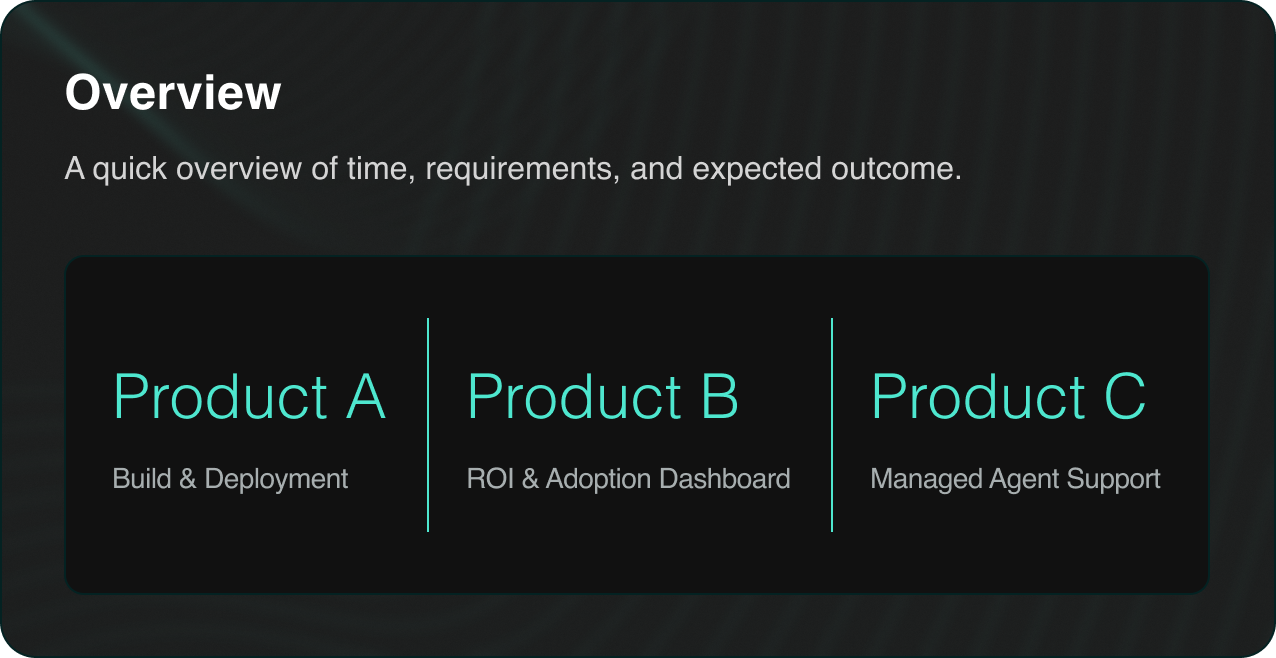

AnalysisBuild and Deployment
What It Is
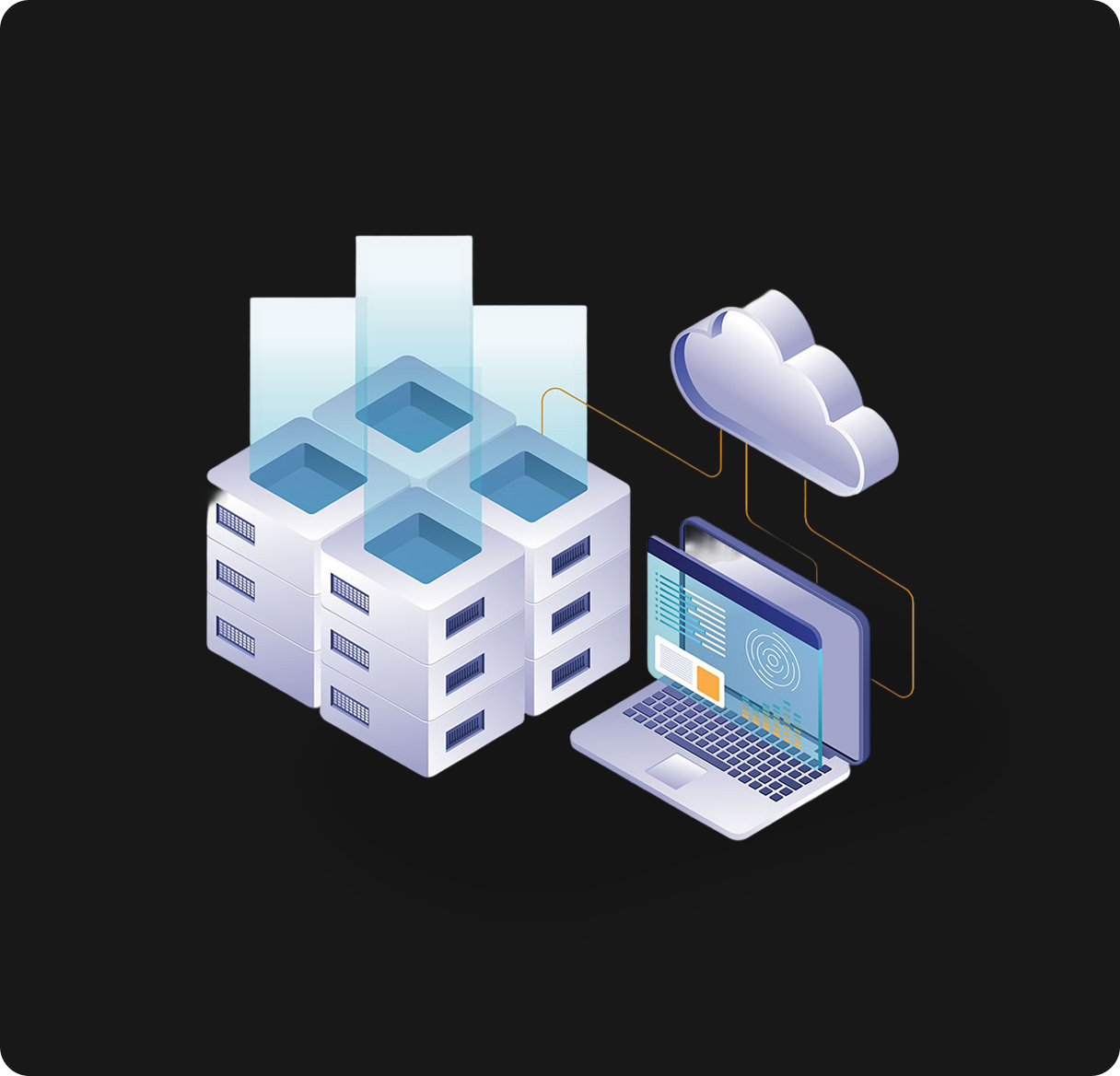
End-to-end design and deployment of agentic workflows, integrated with your systems and governed from day one, from single-task agents to multi-agent systems with human oversight.
Who It Is For
This is for organisations who have a clear understanding of their prioritised workflows, and have a Specification Document defining what is being built.
What Happens
The process involves software development, integration with your existing systems, governance and guardrail design, testing, and deployment. You are involved at regular checkpoints throughout, and nothing goes live without your sign-off.

Agent SolutionsTypes of Agents We Build
Not all agents are the same. Each level adds autonomy, and each requires proportionally clearer oversight.

Simple agents
Follow a fixed set of rules to complete a defined task.

Goal agents
Pursue a specified outcome, selecting from available actions to get there.

Action agents
Interact with external systems, executing tasks like sending emails, updating records, or triggering processes.

Learning agents
Adapt their behaviour over time based on feedback and results.

Complex agents
Coordinate multiple sub-agents to manage a broader workflow, with human oversight governing the overall system.
What Sets Us ApartWhy Our Approach Is Different
Where appropriate, we involve your own software teams in the build process so they can learn and become self-sufficient going forward.
Vendor NeutralPlatform-Agnostic
The recommendation follows your existing technology stack, not ours. Depending on what fits your infrastructure, your data, and the workflow being built.







"What has impressed us most is the tailored approach. We are now working more deeply on data readiness and advanced agents."
Kellie Leigh
Co-Founder and HR Director, ICAB

Four programmesSupporting Products

Programme 2Managed Agent Support
-

What It Is
Models update, data changes, integrations shift, edge cases emerge, and things break. Without a support function, you are relying on internal teams to maintain a system they did not build, using technology that evolves rapidly. We offer ongoing post-launch support for live agentic workflows, covering monitoring, incident handling, updates, regression checks, change control, and continuous improvement.
-

What Happens
Support covers proactive monitoring, incident response, scheduled updates, regression testing after platform or model changes, change control, and a continuous improvement cadence. Because the same team that designed and built the workflow delivers support, there is no handover gap and no time lost explaining how the system works.
FAQFrequently Asked Questions
-
We strongly advise against it. Organisations that skip to the build consistently experience higher failure rates, wasted spend, and internal friction because the groundwork has not been done.
-
We strongly advise against it. Organisations that skip to the build consistently experience higher failure rates, wasted spend, and internal friction because the groundwork has not been done.
-
We strongly advise against it. Organisations that skip to the build consistently experience higher failure rates, wasted spend, and internal friction because the groundwork has not been done.
-
We strongly advise against it. Organisations that skip to the build consistently experience higher failure rates, wasted spend, and internal friction because the groundwork has not been done.
-
We strongly advise against it. Organisations that skip to the build consistently experience higher failure rates, wasted spend, and internal friction because the groundwork has not been done.
-
We strongly advise against it. Organisations that skip to the build consistently experience higher failure rates, wasted spend, and internal friction because the groundwork has not been done.
-
We strongly advise against it. Organisations that skip to the build consistently experience higher failure rates, wasted spend, and internal friction because the groundwork has not been done.
Still have questions?
Can’t find the answer you’re looking for? Please chat to our friendly team.

Start a Conversation
If you have a signed-off specification and are ready to build, this is the next step.
Read about Phase 5: Continuous Adoption